
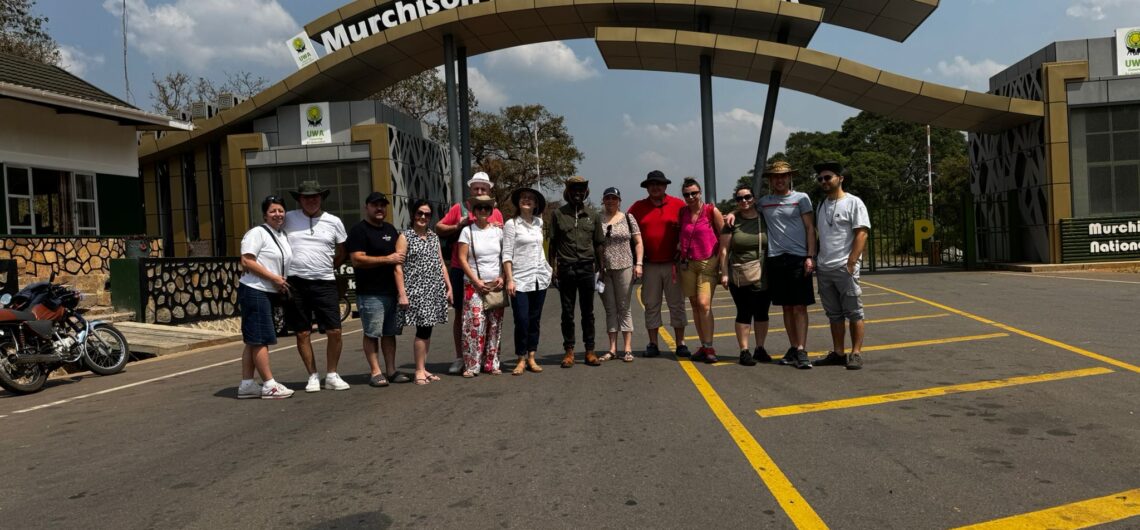
Discover the top benefits of traveling as a family on a Uganda safari in 2026, from wildlife education to bonding, cultural immersion & lifelong memories.
Some of the most powerful moments we have witnessed on safari happen not when someone spots a lion or a silverback gorilla but when a parent sees their child’s face in that exact moment. Eyes wide. Completely silent. Completely present. No phone, no screen, no distraction. Just a child and the wild world, meeting for the first time.
That is what traveling as a family really does. And Uganda, with its mountain gorillas, thundering waterfalls, tree-climbing lions, and one of the warmest cultures in Africa, is one of the best places on earth to experience it.
If you are weighing whether a family safari in Uganda is worth it, this guide is for you. We have put together the ten most compelling benefits of traveling as a family on a Uganda safari, drawn from years of planning family trips right here in Kampala.
Why Uganda Is the Perfect Destination for Family Travel
Before we get into the specific benefits of traveling as a family, it helps to understand why Uganda stands out as a family safari destination.
Uganda is home to more than half of the world’s remaining mountain gorillas. It has the Big Five in Queen Elizabeth and Murchison Falls National Parks. It has chimpanzee trekking in Kibale Forest, boat safaris on the Nile, and some of the most welcoming local communities in East Africa. The country is safe, politically stable, and genuinely friendly to visitors of all ages.
Uganda’s national parks, Queen Elizabeth, Murchison Falls, Lake Mburo, and Bwindi Impenetrable, bring together wildlife, safe trails, and welcoming communities, making the country a strong choice for families of all ages.
Multi-generational travel has become one of the strongest trends for 2026, with families seeking experiences that educate and inspire young conservationists. Uganda delivers all of that and at a price that is genuinely more accessible than many other African safari destinations.
Now, let’s look at exactly why family travel here is so transformative.
1. Family Travel Creates Lifelong Memories That Nothing Else Can Match
Why Safari Memories Stick Unlike Any Other Holiday
Ask any adult about their best childhood holiday, and they will likely describe the one where something extraordinary happened, not the beach resort where every day looked the same. A Uganda family safari is full of extraordinary moments: the morning a family of elephants crossed the road in front of your vehicle, the afternoon a baby gorilla swung onto a branch three metres from your face, the evening you watched hippos from a boat on the Kazinga Channel as the sun turned everything gold.
These are not just nice memories. Research on travel psychology consistently shows that shared experiences, especially novel, nature-based ones, create stronger emotional bonds and more lasting recall than material gifts or passive holidays. The benefits of traveling as a family go far beyond the trip itself.
Every Member of the Family Gets Their Moment
One of the things that makes Uganda particularly good for family travel is that it works for everyone, from young children fascinated by monkeys and birds, to teenagers thrilled by gorilla trekking and white water rafting on the Nile, to grandparents who want a boat cruise and a comfortable lodge where they can watch elephants from the veranda. A well-planned Uganda family safari gives every family member their own unforgettable moment.
2. Traveling as a Family Builds Stronger Family Bonds
Shared Adventure Brings Families Closer Together
Daily life at home has a way of pulling families apart, with different schedules, different screens, different rooms. A family safari in Uganda does the opposite. You are together in the vehicle, together at the dinner table, together in the forest, together under the stars. The shared adventure forces genuine togetherness in the best possible way.
A family safari is not only about adventure but also about learning, bonding, and creating lifelong memories together. The conversations that happen on long drives through Uganda’s countryside, or around a campfire after a full day in the bush, are often the ones families remember most.
Travel Strengthens Family Identity
One of the deepest benefits of traveling as a family, especially across generations, is the way it builds a shared family identity. Grandparents, parents, and children experiencing the same wonder together create a kind of family story that gets told and retold for years. “Remember when we saw the gorillas?” becomes part of who your family is.
3. Family Safari Travel Educates Children in Ways School Cannot
Real-World Learning Through Wildlife and Nature
A family travel adventure presents opportunities to explore an incredible array of disciplines and interests in a remarkably short span of time: wildlife, hospitality, botany, conservation policy, cultures and languages, and different foods.
On a family safari in Uganda, watch how predators hunt, how herbivores graze in patterns, how different species depend on each other for survival.
Children Learn About Conservation Through Direct Experience
During a family safari, children can participate in engaging educational activities designed to teach them about animal behavior, biodiversity, and the challenges facing conservation efforts in Africa.
When a child understands that the $800 gorilla permit they helped their parents pay for goes directly toward protecting the gorillas and supporting local communities, conservation stops being an abstract concept. It becomes personal.
The Uganda Wildlife Education Centre is perfect for Young Children
For families with very young children, the Uganda Wildlife Education Centre (UWEC) in Entebbe is a wonderful addition to any safari. Children can see rescued wildlife at close range in a safe, well-managed environment, a great introduction to Uganda’s animals before heading into the national parks.
4. Traveling as a Family Exposes Children to New Cultures
Cultural Immersion Is One of the Most Important Benefits of Family Travel
Uganda has over 50 distinct ethnic groups and one of the richest cultural tapestries in Africa. Traveling as a family gives children an opportunity to encounter cultures that are completely different from their own and to do so with respect, curiosity, and an open mind.
Families can visit local communities near the parks. Children love joining in traditional dances, drumming lessons, or storytelling sessions. Parents often enjoy learning about farming and local crafts. These cultural moments make the safari more meaningful and educational.
In Uganda specifically, communities near Bwindi, Queen Elizabeth, and Murchison Falls have fascinating stories to tell about how they coexist with wildlife, how traditional knowledge has been passed down for generations, and how tourism is helping to improve lives. These are lessons no classroom can fully deliver.
Children Who Travel Are More Empathetic and Open-Minded
One of the most important long-term benefits of traveling as a family is the effect it has on how children see the world. Children who experience different cultures firsthand develop stronger empathy, greater adaptability, and a broader worldview. They become adults who are comfortable with differences, curious about others, and aware that their way of life is one of many.
5. Family Travel Encourages Children to Disconnect From Screens
Nature Is the Best Alternative to a Screen
We live in an age of constant digital distraction. One of the most immediate and visible benefits of traveling as a family on a Uganda safari is watching children voluntarily put their devices away because what is happening outside the window is simply more interesting than anything on a screen.
The Mental Health Benefits of Nature for Children and Adults
Research consistently shows that time in nature reduces stress, improves mood, enhances attention, and boosts creativity in both children and adults. A Uganda family safari offers days of uninterrupted immersion in some of the most biodiverse and beautiful natural environments on earth. The benefits extend far beyond the holiday itself.
6. Uganda Offers Family-Friendly Activities for Every Age
From Toddlers to Teenagers, Uganda Has Something for Everyone
One of the practical benefits of traveling as a family in Uganda is the sheer variety of experiences available, suitable for different ages and energy levels.
For young children: boat cruises on the Kazinga Channel or the Nile, game drives in open vehicles, visits to the Uganda Wildlife Education Centre, and community walks near lodge camps where wildlife often comes to you.
For older children and teenagers: chimpanzee trekking in Kibale Forest, gorilla trekking in Bwindi (minimum age 15), white water rafting on the Nile in Jinja, quad biking, and guided nature walks.
For parents and grandparents: sundowner drinks on the Nile, boat safaris, bird watching in Bwindi and Murchison, and relaxed game drives where the pace is entirely your own.
Families often travel to the Ishasha sector of Queen Elizabeth National Park in search of tree-climbing lions, one of Uganda’s rare wildlife spectacles. These lions rest lazily in fig trees, an unusual behavior that sparks endless questions from children and makes for incredible safari stories.
Family-Friendly Lodges Make the Experience Comfortable for Everyone
Uganda has a growing number of family-friendly safari lodges that genuinely cater to children. Spacious family rooms, child-safe pools, kids’ activity programs, and guides who know how to engage young travelers all make a significant difference. We select our partner lodges carefully so that parents can relax while children are happy and engaged.
7. Family Travel Teaches Responsibility and Environmental Awareness
Children Who Experience Wildlife Are More Likely to Protect It
There is a direct link between childhood nature experiences and adult conservation behavior. When a child watches a silverback gorilla in Bwindi or sees elephants drinking at a waterhole in Murchison Falls, something shifts. The abstract idea of “endangered species” becomes a real, breathing creature they have looked in the eyes.
Children are exposed to geography, biology, ecology, and cultural studies in real time. They observe predator-prey relationships and gain insight into the delicate balance that sustains ecosystems.
8. Family Safaris Reduce Stress and Improve Family Well-being
Getting Away Together Is Good for Everyone’s Mental Health
One of the most underrated benefits of traveling as a family is the effect a proper holiday has on family well-being. The pressures of work, school, schedules, and routines create a kind of background stress that families often don’t notice until it lifts. A Uganda safari lifts it completely.
In the bush, the pace of life follows the animals, not the clock. Mornings start early, but for the best possible reason. Afternoons slow down. Evenings are spent together with good food and extraordinary skies. The rhythm of safari life is genuinely restorative in a way that a beach holiday or a city break rarely is.
9. Traveling as a Family Gives Children a Global Perspective
The World Looks Different When You Have Seen It
Children who travel internationally develop a different relationship with the world than those who have not. They understand geography because they have been there. They understand poverty and wealth because they have seen both. They understand that life can be lived very differently from how they live it and that both ways have value.
Uganda is a particularly powerful destination for this. The contrast between Kampala’s vibrant urban energy and the remote beauty of Bwindi or Kidepo Valley National Park, between the comparative wealth of safari tourists and the warmth and dignity of communities living near the parks, these contrasts open young minds in ways that are profound and lasting.
Family Travel Builds Confidence in Children
Navigating new environments, communicating across language barriers, adapting to different foods and routines, travel builds confidence and resilience in children in a way that is hard to replicate at home. A child who has done a gorilla trek in Bwindi, or stayed awake listening to hippos from their lodge room, has done something genuinely brave. That confidence carries over into every other area of their life.
10. A Uganda Family Safari Is More Affordable Than You Think
One of the Most Accessible Family Safari Destinations in Africa
One of the practical benefits of traveling as a family to Uganda, specifically rather than other African safari destinations, is the relative affordability. Uganda’s gorilla permits at $800 per person are significantly cheaper than Rwanda’s $1,500. Accommodation options span every budget from simple guesthouses to comfortable mid-range lodges. Game parks like Murchison Falls, Queen Elizabeth, and Lake Mburo offer world-class wildlife experiences without the premium price tags of East Africa’s more famous destinations.
Family Packages That Work for Different Budgets
We offer Uganda family safari packages starting from $1,500 per person, designed to give every family member an extraordinary experience without unnecessary cost. We build every itinerary around your family’s ages, interests, budget, and travel dates, so no two family safaris we plan are exactly alike.
Practical Tips for Planning Your Uganda Family Safari
Now that you understand the benefits of traveling as a family in Uganda, here are the key things to keep in mind when planning:
Book early. Gorilla trekking permits sell out months in advance, especially in peak season. Family lodge rooms also fill quickly during school holidays. Book 4–6 months ahead wherever possible.
Choose the right parks for your family’s ages. Murchison Falls and Queen Elizabeth are excellent for younger children, and game drives and boat cruises are relaxed and accessible. Bwindi gorilla trekking requires participants to be at least 15 years old. Kibale chimpanzee trekking is possible for children aged 12 and above.
Pack wisely. Long-sleeved clothing for all ages, sunscreen, hats, binoculars (children love these on game drives), and a good camera. Lightweight rain jackets are essential for Bwindi.
Talk to your children before you go. Children engage more deeply with a safari experience when they know what to expect. Brief them on the animals, the rules, and what they might see. Their excitement will be part of the experience for you.
Travel with a local operator who understands family needs. An operator based in Uganda who knows the parks, the lodges, the guides, and the logistics is worth more than any amount of online research. We have planned dozens of Uganda family safaris, we know what works and what doesn’t.
Plan Your Uganda Family Safari With Us
We are a local tour operator based in Kampala, Uganda. We specialize in designing Uganda family safaris that combine adventure, education, comfort, and cultural connection for every age and every budget.
Our Uganda family safari packages start from $1,600 per person. Get in touch with us today for a personalised itinerary built around your family’s ages, interests, and travel dates. Let’s create some memories that your family will talk about for the rest of your lives.

Comments